




















From nuclear disarmament and the war in Ukraine to water security, Gaza and artificial intelligence, Kazakhstan has used the United Nations General Assembly to argue that international cooperation must once again produce tangible results.
At a moment of deepening geopolitical division, Kazakhstan has delivered a broad-ranging appeal for renewed international cooperation, warning that the erosion of trust between nations is threatening both global security and the ability of international institutions to respond effectively to crises.
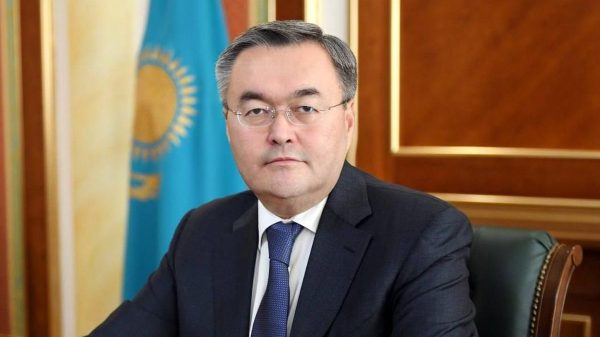
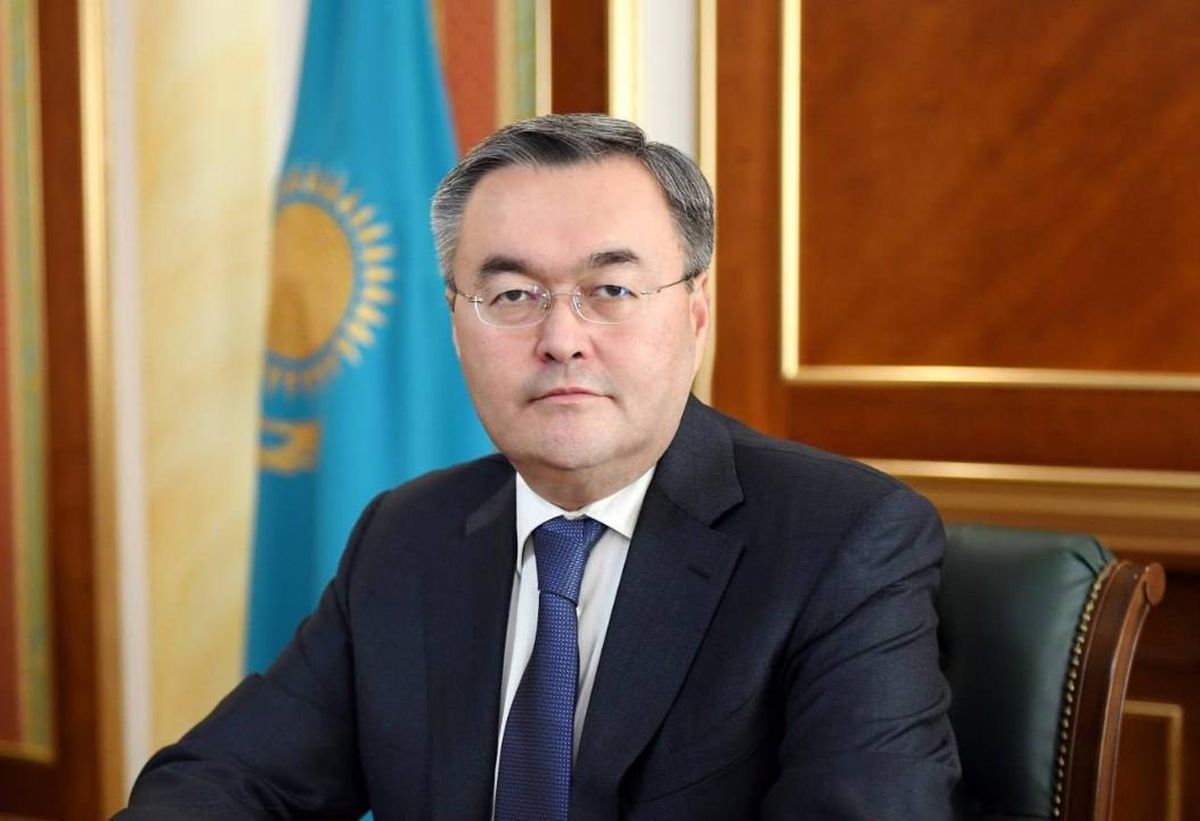
Addressing the General Debate of the 81st session of the United Nations General Assembly in New York on 25 September, Kazakhstan’s Foreign Minister Mukhtar Tileuberdi (pictured) placed the restoration of trust at the centre of his country’s foreign-policy message.
Kazakhstan, he said, remains committed to the principles of the UN Charter and sees multilateralism not as an abstract diplomatic concept but as a practical means of finding common ground and addressing shared global challenges.
The address reflected an increasingly prominent strand of Kazakhstan’s international positioning: that middle powers can play a larger role in bridging geopolitical divisions at a time when relationships between the major powers are becoming more difficult.
Tileuberdi warned that international law could not command confidence if it was applied selectively and argued that international institutions had to demonstrate their relevance through results.
That argument extended directly to reform of the United Nations itself.
Kazakhstan expressed support for the UN-80 reform initiative but stressed that restructuring should ultimately be judged by whether the organisation becomes better at preventing conflict, responding to crises and delivering results for its member states.
Security Council reform remains central to that debate. Kazakhstan called for broader representation for Asia, Africa and Latin America, together with a stronger voice for developing countries and middle powers.
The Kazakh Foreign Ministry subsequently described the intervention as setting out the country’s priorities across political transformation, international security, sustainable development, environmental protection and water security. (Government of Kazakhstan)
Nuclear experience shapes Kazakhstan’s security message
Nowhere is Kazakhstan’s international message more strongly rooted in its own history than on nuclear weapons.
Thirty-five years after the closure of the Semipalatinsk nuclear test site, Kazakhstan again used the UN platform to argue for renewed nuclear diplomacy.
The country inherited what was then the world’s fourth-largest nuclear arsenal following the collapse of the Soviet Union but subsequently relinquished those weapons. Tileuberdi told the General Assembly that this experience demonstrated Kazakhstan’s belief that abandoning nuclear weapons had strengthened rather than diminished its security and international standing.
Against the backdrop of renewed international tensions, Kazakhstan called for the relaunch of high-level dialogue between the nuclear powers and said it would be prepared to host one of their future meetings.
Astana is also continuing to promote its proposal for an International Agency for Biological Security as a mechanism for strengthening the Biological Weapons Convention.
The intervention came immediately before the International Day for the Total Elimination of Nuclear Weapons on 26 September. UN officials similarly warned that recent failures to achieve consensus on disarmament and non-proliferation demonstrated the difficulty of maintaining cooperation in an increasingly divided international environment. (The United Nations Office at Geneva)
Ukraine, Black Sea exports and energy security
Kazakhstan also addressed one of the most sensitive challenges confronting Europe.
Tileuberdi said his country remained deeply concerned by the war in Ukraine and reiterated Kazakhstan’s view that even the most difficult conflicts must ultimately be settled through diplomacy and negotiation.
But the statement went further by explicitly addressing attacks affecting Kazakhstan’s own economic interests.
Kazakhstan condemned repeated drone attacks against infrastructure used for the export of Kazakh crude oil, including incidents involving commercial vessels in the Black Sea basin.
The government argued that such attacks risk civilian navigation, international commerce and the stability of global energy supplies, and called for critical civilian infrastructure and commercial shipping to be protected in accordance with international law.
For Europe, the issue carries an additional dimension. Kazakhstan has become an increasingly important energy and transport partner for European markets seeking diversified supply routes between Central Asia and Europe.
The UN address therefore connected Kazakhstan’s traditional diplomatic emphasis on dialogue with a more immediate concern: keeping international transport and energy corridors functioning during periods of conflict.
Gaza and a wider role in peacekeeping
The Middle East formed another substantial part of the address.
Kazakhstan reiterated its support for a negotiated two-state solution involving an independent and viable Palestinian state living alongside Israel in peace and security.
It also stressed the need for humanitarian assistance, protection of civilians and reconstruction in Gaza.
The speech pointed to Kazakhstan’s existing peacekeeping contribution through UNDOF and UNIFIL and said the country was prepared to assume practical responsibility in internationally mandated stabilisation efforts.
Kazakhstan also said it intended to join the Abraham Accords, viewing them as an additional diplomatic platform that could reinforce rather than replace the UN-led process towards a two-state solution.
The approach is consistent with Kazakhstan’s broader effort to maintain relationships across competing political blocs while placing dialogue at the centre of its foreign policy.
Water emerges as a global security question
Among the most forward-looking elements of the speech was Kazakhstan’s attempt to elevate water security higher on the international agenda.
For Central Asia, the question is particularly immediate.
Water links agriculture, electricity generation, climate resilience, public health and relations between neighbouring states. Kazakhstan argued at the UN that existing global arrangements for managing water are too fragmented to meet those challenges.
President Kassym-Jomart Tokayev has consequently proposed the creation of an International Water Organization under the auspices of the United Nations.
Its objective would be to create a more coherent and accountable system of international water governance and improve implementation of agreements between states.
Kazakhstan intends to continue promoting the proposal in connection with the 2026 United Nations Water Conference in Abu Dhabi.
The initiative sits alongside a broader environmental programme highlighted in the speech, including the Regional Ecological Summit held in Astana and proposals concerning protection of the Aral Sea and the Amu Darya and Syr Darya river systems.
The Foreign Ministry has also highlighted water security as one of the central international themes advanced by Tileuberdi during the General Assembly. (Government of Kazakhstan)
Kazakhstan brings AI governance onto the diplomatic agenda
The address also demonstrated how quickly artificial intelligence has moved from the technology sector into mainstream international diplomacy.
Kazakhstan says it is investing domestically in computing infrastructure, digital capacity and AI skills and has adopted both an Artificial Intelligence Law and a new Digital Code.
But Tileuberdi warned that technological development without adequate governance could increase inequality, widen the digital divide and introduce new security risks.
The military implications received particular attention.
The use of AI in warfare and cyber operations, the minister argued, could have far-reaching consequences for international stability, making human oversight and international rules increasingly important.
Kazakhstan therefore backed greater international cooperation through UN mechanisms dealing with ICT security and AI governance, while promoting the UN ESCAP Asia-Pacific Digital Solutions Centre in Almaty as a regional platform for cooperation.
A middle-power argument for rebuilding trust
Taken together, the proposals form something broader than a list of Kazakhstan’s diplomatic priorities.
They reflect an argument about how countries outside the traditional great-power blocs can operate in a more fragmented international system.
Kazakhstan is seeking to connect its experience as a nuclear-disarmament state, a Central Asian energy producer, a country exposed to transboundary water pressures and an increasingly ambitious digital economy into a single foreign-policy narrative.
That narrative places considerable weight on the UN.
Rather than arguing that multilateral institutions have become irrelevant, Kazakhstan’s position is that they must become more representative and more effective.
The Foreign Minister’s conclusion distilled that argument into a simple diagnosis: the international system is suffering from a deficit of trust, and trust can only be rebuilt through greater cooperation rather than less.
International institutions, he said, must produce tangible benefits, while states themselves must honour commitments and respect agreed global standards.
Kazakhstan’s stated choice is therefore “cooperation over confrontation” — accompanied by a series of proposals intended to translate that principle into institutions, negotiations and practical international initiatives.
In a General Assembly dominated by wars, geopolitical rivalry and anxiety about the future of the international order, Kazakhstan’s message was that middle powers need not remain spectators.
They can attempt to create the diplomatic space in which cooperation continues when relations between larger powers become increasingly difficult.